
What giving does for the giver, and why receiving well matters just as much
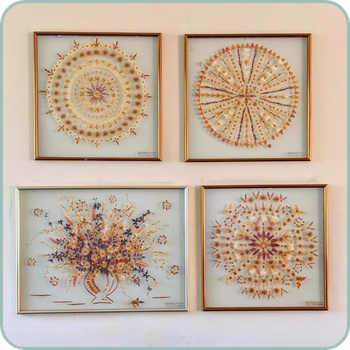
A few weeks ago, one of our regular guests asked whether he could buy one of the pressed flower artworks my grandmother, Annette Kruger, was so famous for. She was a founding member of Hoogland. He told me he can still picture her in her eighties, guiding guests, giving demonstrations and working hard to make Hoogland what it is today, and that she still inspires him today, long after her passing.
I proudly gave it to him as a gift, because I knew he would cherish it and honour her legacy by displaying it with meaning.
It didn’t surprise me that he found it hard to accept. I struggle to accept gifts myself. He desperately wanted to give something tangible in return, to make it a fair exchange. But to me, seeing my grandmother’s legacy recognised in this way was more than I could have wished for.
That small moment captures something we all know but rarely say out loud: a gift has two sides, and both of them matter.
That small moment captures something we all know but rarely say out loud: a gift has two sides, and both of them matter.
Many of us associate December with the heavy pressure of gift-giving. But gifting isn’t seasonal. Giving, and knowing how to receive, is one of the oldest ways people connect, shaped by cultural rules and traditions for as long as humans have walked the earth. It isn’t even unique to us: insects, birds and many mammals give and receive gifts too.
So what actually happens when one person gives something to another? The research confirms what most of us figured out long ago: the giver often benefits as much as the receiver, and sometimes more.
And there is a second truth that gets far less attention. Receiving well is not a passive act. It is the other half of an agreement between people, and it matters just as much as the giving. As you read what giving does for the giver, keep one thought in mind: every time you let someone give to you, these are the benefits you are handing them.
Spending on Others or on Yourself
Some of the clearest evidence comes from a simple experiment, repeated in different ways around the world: give people money, and ask some to spend it on themselves and others to spend it on someone else. Then measure what happens.
Happiness. In a well-known study, students were handed an envelope with either a small or a larger amount of cash and told to spend it by five that afternoon. That evening, the ones who had spent it on others were happier. The amount made no difference. Only who it was spent on mattered. In survey data from 136 countries, people who had recently given to charity were happier in 120 of them, in poor and rich countries alike, and one of the follow-up experiments was run right here in South Africa. It even starts early: toddlers just under two were visibly happier giving a treat away than receiving one, and happiest of all when it came from their own pile.
The brain. In a Swiss study, participants received money every week for four weeks. Those who committed to spending it on others went on to make more generous choices and reported a greater rise in happiness. Brain scans showed stronger links between the regions involved in understanding others, reward and happiness. The brain treats giving as a reward.
The heart. A University of British Columbia team gave older adults with high blood pressure the equivalent of about R700 a week for three weeks. Those who spent it on others ended the study with lower blood pressure by an amount comparable to starting medication or an exercise programme. Those who spent it on themselves showed no change. The benefit was strongest when they gave to someone they felt close to.
Giving and happiness also feed each other. People who remembered a time they spent money on someone else felt happier, and the happier they felt, the more likely they were to give again. One act is a small thing. Repeated over weeks and years, it becomes a way of life.
So when someone wants to treat you, and you let them, you aren’t only receiving a gift. You are giving them a lift in happiness, a reward in the brain and, quite possibly, a healthier heart.
Supporting the People Closest to Us
A second group of studies looks at the support we give our partners and loved ones and here the effects reach from the brain all the way to healing and lifespan.
Calmer under stress. At UCLA, women held their partner’s arm to comfort him while he received a mild electric shock. Supporting him activated their own reward centres and calmed the brain’s alarm system: comforting someone soothed the comforter. People who wrote supportive notes to a loved one before a stressful task had a smaller rise in blood pressure and lower levels of a saliva marker of acute stress, and people who gave to someone straight after a stressful task recovered faster, with heart rate and blood pressure settling more quickly. Interestingly, they didn’t report feeling less stressed, and that’s a good thing. Stress gives us energy and focus, and the right amount is essential for daily life. What changed was the cost to the body.
Faster healing. In a study of married couples given small blister wounds on the forearm, those with the highest levels of oxytocin, the hormone of trust and connection, healed fastest. When couples thanked each other in a laboratory, the partner being thanked felt more loved and understood when their oxytocin was higher.
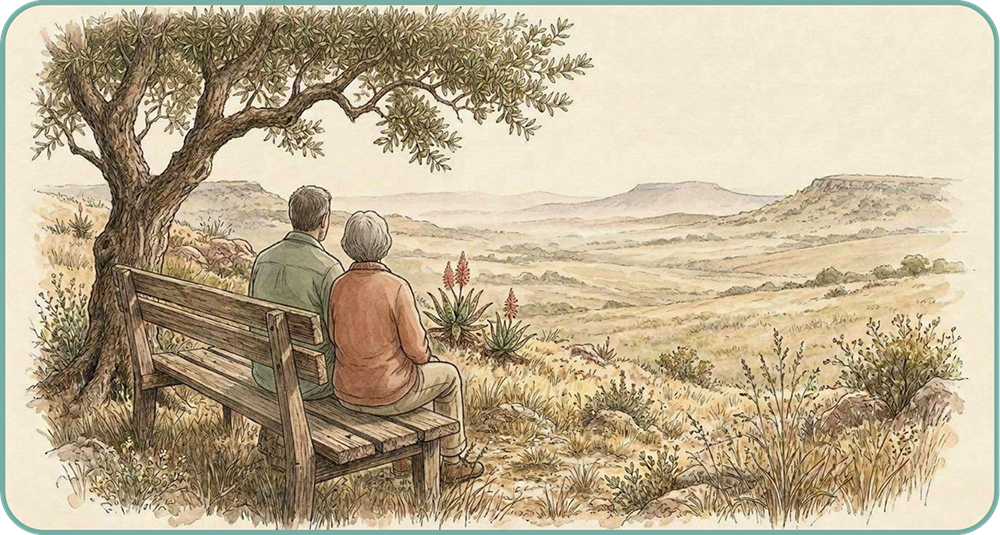
A longer life. A University of Michigan study followed 423 older couples for five years. People who gave no practical or emotional support to others were more than twice as likely to die during that time as those who regularly helped their spouses, friends, relatives and neighbours. The help was ordinary: lifts, errands, shopping, minding the grandchildren, being there to talk. Even after accounting for health, income and mood, giving still made the difference.
Think about what that means for those of us who would rather do it all ourselves. When you let a loved one drive you to an appointment, cook you a meal or simply sit and listen, you are giving them calmer nerves, better healing and, it seems, more years.
Kindness, Gratitude and Oxytocin
Oxytocin ties these findings together. It is our deeply healing hormone of trust and connection, released in ordinary moments of kinship: a hug, a shared meal, a kind word. When people in a Claremont study watched a moving story about a father and his terminally ill son, their oxytocin rose by 47 percent and those with the strongest response gave the most to a stranger afterwards. People with a particular variant of the gene that governs oxytocin release are also more likely to say thank you in daily life.
Small Acts and Pondering Kindness
It doesn’t take a grand gesture. Over four weeks, people who did small acts of kindness for specific others showed measurable changes in their immune cells: less activity in the genes that drive chronic inflammation and more in the genes that fight viruses.
Even remembering counts. In a 2021 study, people who simply recalled kind acts they had done gained as much in wellbeing as those who went out and did new ones. And a six-week loving-kindness meditation course improved vagal tone, a measure of how well the nervous system settles the heart, the more people felt connected to others.
A gratitude meditation brings all of this together. Sit for five minutes and bring to mind a time someone thanked you and truly meant it. See their face. Remember what you did and what it meant to them. You are reliving a kindness and receiving its thanks a second time. And when you thank someone warmly, you set the same healing system in motion in them.
Why Oxytocin Matters for Health
Giving Well
The Gift They Asked For
Many of us feel that a requested gift counts for less, as if buying the item on the wish list shows less effort than finding a surprise. The research says the opposite. In five studies by researchers at Stanford and Harvard, people appreciated the gifts they had asked for more, and even rated them as more thoughtful and personal. The givers had it backwards.
To the person receiving it, a requested gift is proof that you listened. The thought lies in paying attention, not in guessing.
Givers tend to picture the moment of unwrapping: the surprise and the smile. Receivers live with the gift for months or years and value what they actually use. That is why something as plain as a good kettle may become the most loved gift of all, and why experiences, like a massage or an outing, tend to bring more lasting joy than objects.
When Giving Does the Most Good
The Other Half of the Gift
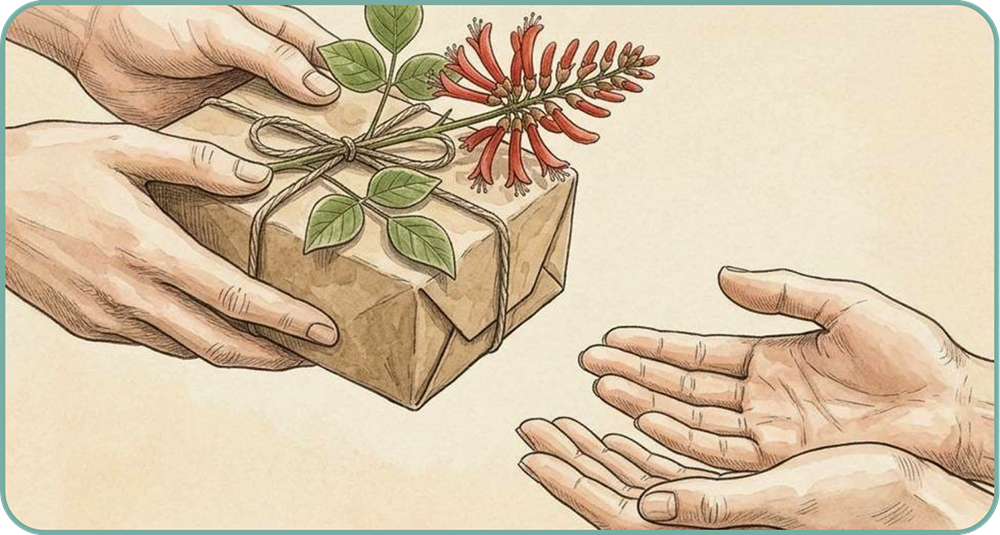
All of these benefits depend on one thing: someone on the other side, receiving.
Almost a century ago, the French anthropologist Marcel Mauss studied how gifts work across many cultures. He found that gift exchange rests on three obligations: to give, to receive and to give in return. None works without the others. A refused gift doesn’t simply go back on the shelf. Refusing the gift is refusing the relationship that came with it.
Mauss also observed that a gift carries something of the person who gave it. That is why a jersey knitted by a grandmother, or a pressed flower picture made by one, can mean more than anything bought in a shop. The object is the carrier. The relationship is the content.
The Roman philosopher Seneca made the same point in On Benefits: receiving a gift gladly is the first repayment of it. Long before any gift is returned, a warm and sincere response has already given something back.
Why Receiving Can Be Hard
Many capable people find it far easier to give than to receive. Carers, parents, people who run businesses, and those used to being the strong one in the family often deflect a gift by reflex. “You shouldn’t have.” “It’s too much.” “Let me pay you back.” Or they rush to return the favour so the account is settled. I recognise myself in every one of those.
These responses feel modest, but to the giver they can feel like a door closing. A giver who is brushed off loses the sense of having made a difference, and that sense is one of the main reasons giving feels so good. When we refuse care, we quietly refuse others the very benefits we have just read about. Letting ourselves be cared for is one of the kindest things we can do for the people who love us.
Gratitude Binds Us Together
Psychologist Sara Algoe describes gratitude as a social emotion with three jobs: it helps us find good people, reminds us of the good people we already have, and binds us more closely to them. When we thank someone
by noticing what they did and what it says about them, they feel understood and cared for, and the relationship grows stronger.
Most of us underestimate how much this matters. In studies at the University of Chicago, people who wrote thank-you letters expected the recipient to feel mildly pleased and a little awkward. The recipients felt far better than predicted, and hardly awkward at all. The writers worried about finding the right words. The recipients cared about the warmth.
Deeper Than Materialism
A cynic might say December is about things. The research points the other way. How much we spend predicts very little. What matters is choice, closeness, and knowing that the gift was received and mattered. The exchange of objects is only the visible part of something much older: a running agreement between people that they will look out for one another.
In southern Africa we have a phrase for this: Umuntu ngumuntu ngabantu, a person is a person through other people. Giving and receiving are how we live it every day.
Accepting a gift graciously is not taking. It is taking part.
Try this
- 1
Give one gift because you want to, not because you feel you should. Notice how it feels.
- 2
Ask, or listen, for what someone wants. Giving the gift they asked for isn’t the lazy option. It shows you were paying attention.
- 3
Give time or practical help to someone close: a lift, a meal, an afternoon.
- 4
When you receive, stop at thank you. Skip “you shouldn’t have.” Say what the gift tells you about the giver: that they remembered, noticed or took trouble.
- 5
Let someone help you, especially if you are usually the one who helps. It is a gift to them.
- 6
Write a thank-you note to someone whose kindness you never fully acknowledged. It will mean more than you expect.
- 7
Spend five minutes remembering someone who thanked you. See their face and recall what your kindness meant to them.
Health That Lets You Keep Giving
As we approach our fiftieth year in 2027, Hoogland’s purpose remains what it was in my grandmother’s day: to help people regain and keep their contributing roles in their families and communities. The research shows why that matters. Giving isn’t only something healthy people can afford to do. It is part of what keeps them well.
If you’re looking for a gift this December that isn’t another thing, consider time at Hoogland for someone you love. And because a gift should go both ways, we’ve added one of our own.